Things we did
Website Development
Custom Booking Application
Three-Role Operations Backend
Reactive Data Architecture
Regional Pricing Engine
Scheduling Checks
Customer Accounts
Job Status History
Payment Integration
Client
Got Filth Cleaning
Year
2026
Live website
gotfilth.com

An Uber-inspired cleaning platform — a branded site, a seven-step booking app, and one shared record behind all three roles.

The approach
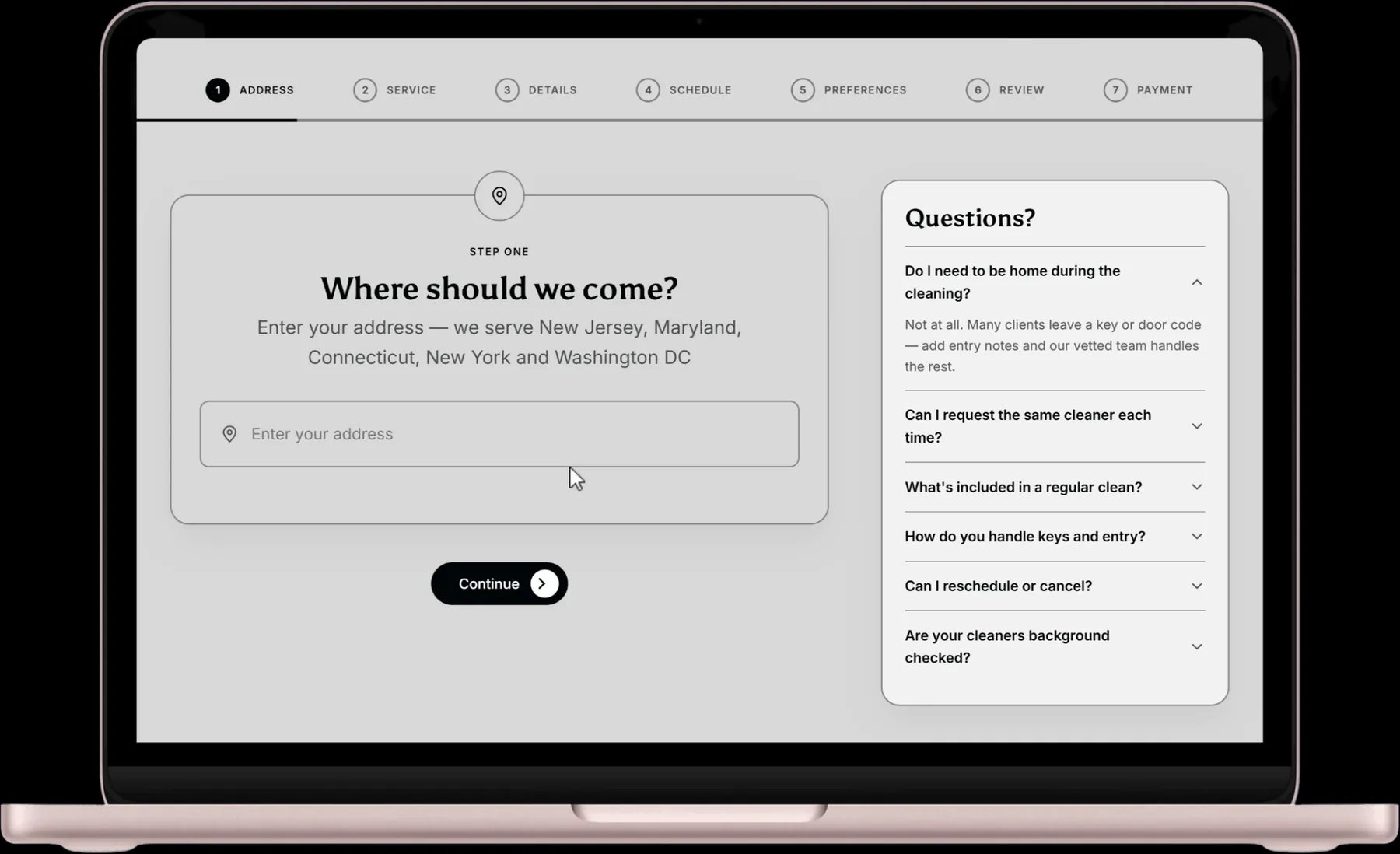
The platform brings the convenience of an Uber-style service experience to cleaning: a guided booking process, organized job information, and clear service stages. At the center is a shared booking record. Customer requests, administrator assignments, worker status changes, and payment records belong to the same underlying order, which gives each role a consistent foundation for managing its part of the service.
Step one of the booking application — an address field under a seven-step indicator running from Address to Payment, beside a panel of common questions

The booking flow

We developed a seven-step flow covering the service address, cleaning requirements, extras, scheduling, preferences, booking review, and payment handoff. Behind the interface, custom business logic checks service coverage, calculates regional pricing, applies eligible discounts and surcharges, and checks scheduling capacity. Pricing is calculated on the server, so the booking follows the business’s rules consistently.
“Coordination is the product. The client, the office and the cleaner all read the same booking, so nobody has to phone anyone to find out what is happening.”
The Founder
Creative.Studio
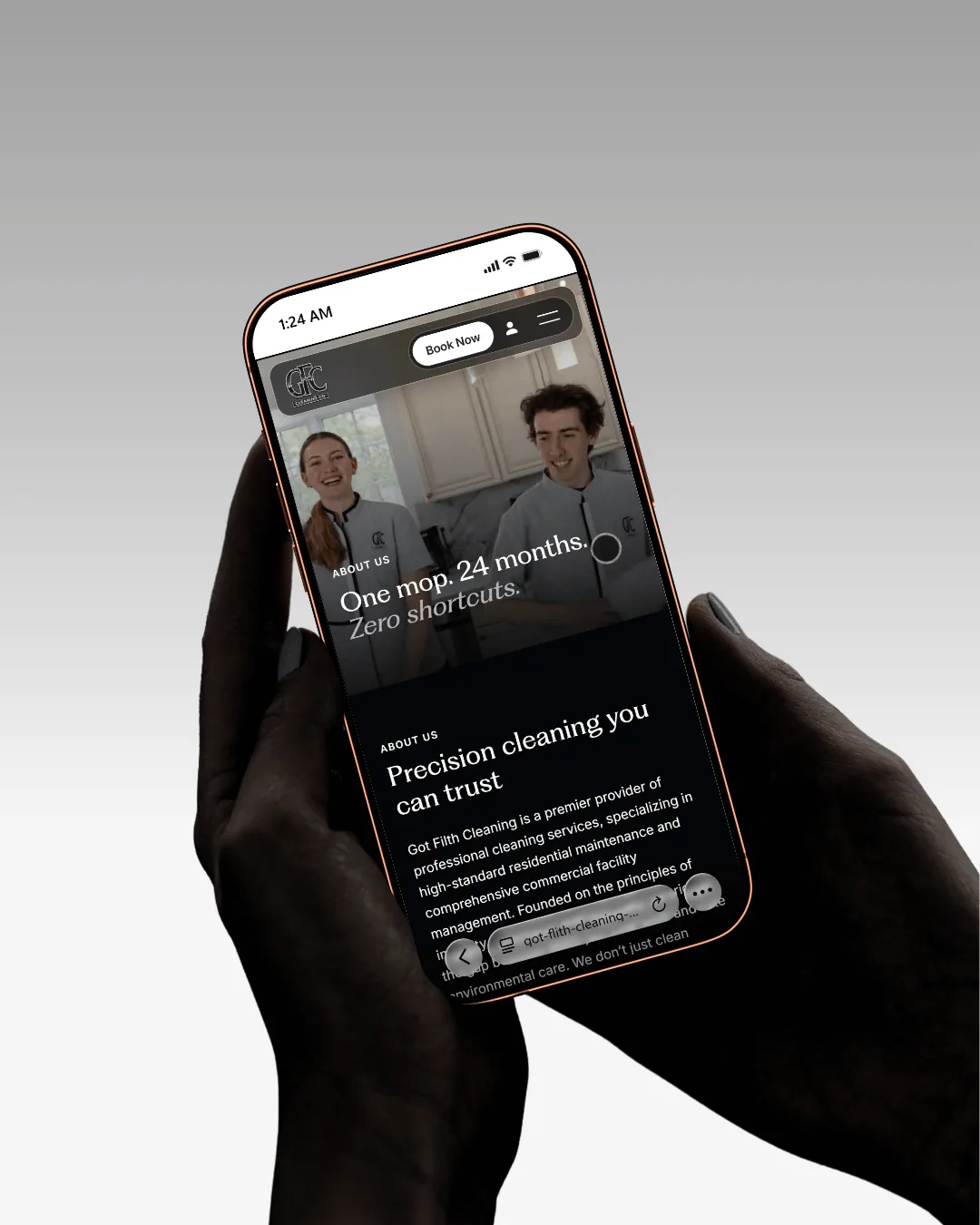
The Got Filth about page held in hand — “One mop. 24 months. Zero shortcuts.” above “Precision cleaning you can trust”
the promise, in hand
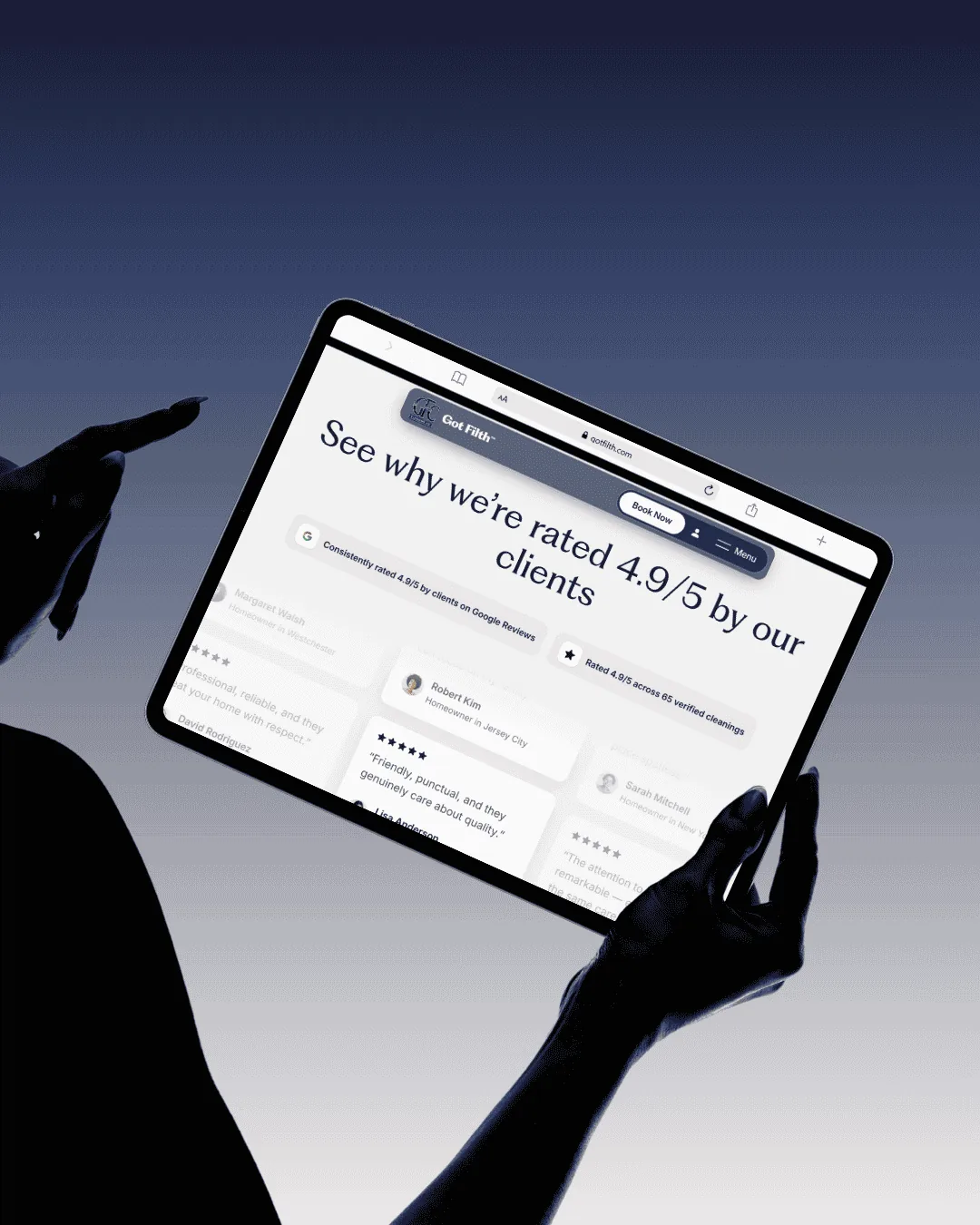
An iPad raised in hands against an indigo sky, open on the client stories — rated 4.9 out of 5 across 65 verified cleanings
client stories

The outcome

Three roles work from one record: clients book and keep their own history, administrators review orders, assign and reassign cleaners, and monitor revenue and operational alerts, and cleaners open the jobs assigned to them and update their own progress. Every status change — confirmed, assigned, travelling, cleaning, complete — is written against the order, and Convex reactive queries carry it to all three views from the same source. Customer booking and cleaning operations now sit on one foundation.

Before you ask

What people want to know next.

Could you build something like this for us?

Yes, and it would not look like this. Every case study here started from a different business with different customers, and the shape of the work followed. What carries over is the method: understand what the customer is actually trying to do, then build the front and the back of it as one thing.

How much of this is custom, and how much is a template?

The design is drawn for the client every time. The engineering is custom wherever the business logic is — booking rules, pricing, roles, scheduling — and boring, proven tooling everywhere else. We do not rebuild what already works, and we do not force a business into a template that nearly fits.

Who writes the words and takes the photographs?

We do the words with you, in a working session rather than a questionnaire. Photography is either yours, art-directed by us, or shot by a photographer we bring in. Nothing ships as placeholder text.

Can we update it ourselves afterwards?

Yes. Prices, services, articles and images live in one place per site, and we hand over a short written walkthrough of the parts you will actually touch. If you would rather not touch it at all, we keep it maintained instead.

What happens if something breaks at nine on a Friday?

You reach a person, not a ticket queue. Every site is monitored, backed up and version-controlled, so rolling back a bad change takes minutes.

Where do we start?

A call, and a look at what you already have. If the honest answer is that you need less than a full rebuild, we will say so — several of the projects here began that way.